
🌺 SEL Goes Global: Co-Creating Early Childhood Curriculum in St. Lucia

Updated: Dec 15, 2025
How Culture, Community, Play, and Design Thinking Are Reimagining Early Learning Across the Island
What happens when culture, community, and creativity meet early childhood learning?
That’s exactly what we explored during a yearlong collaboration with the Ministry of Education in St. Lucia and Coconut Bay Beach Resort & Spa and our STEM literacy partners at 21stCentEd. Together, we embarked on a transformational journey to co-create an early childhood curriculum that is not only developmentally sound but deeply rooted in the stories, traditions, and joy of St. Lucian children.
This wasn’t consulting. It wasn’t curriculum delivery. It was co-creation - with educators, for educators, inspired by the island itself.

🌴 A Partnership Rooted in Culture, Community & Joy
We began with two immersive trips across St. Lucia — visiting 12 early childhood centers, observing classrooms, and listening deeply to teachers.
Our intention was clear:
👉 identify strengths
👉 honor what was already working
👉 understand the cultural rhythms and values shaping early childhood education
We found rich sensory environments, joyful outdoor play, music-filled mornings, and a deep commitment to community.
Then came the magical second phase: bringing together educators from all 130 early childhood centers to share the initial curriculum vision, gather their insights, and co-create classroom-ready experiences.
Educators responded with enthusiasm, creativity, and pride. They shared cultural traditions, family stories, games from childhood, local nature-based practices, and the real challenges that shape daily teaching.
They said things like:
“Our students will learn in ways that feel like home — and that will make them more confident and engaged.” — St. Lucian Early Childhood Teacher
This work isn't just building curriculum. It is building connection, trust, and shared ownership.

🎶 Why Cultural Responsiveness Matters in Early Childhood SEL
Research from CASEL, UNICEF, and global early childhood experts is clear:
SEL is most impactful when it reflects children’s lived experiences. When students see their cultural traditions in the classroom - the foods, music, stories, languages, family structures, celebrations - they feel:
✔ Seen
✔ Valued
✔ Safe
✔ Ready to learn
St. Lucia’s rich heritage gave us everything we needed:
Storytelling circles
Local music and rhythms
Traditional games
Nature-based exploration
Community-centered learning
Intergenerational wisdom
Culturally responsive SEL didn’t feel like an “addition.” It felt like coming home.
🧠 From Compliance to Curiosity: Reggio Emilia, Freire & Design Thinking in the Caribbean
In designing the curriculum, we drew inspiration from two world-changing philosophies - and one powerful innovation framework.
1️⃣ Reggio Emilia: Play, Questions & Creativity
Reggio Emilia views children as:
✨ capable
✨ curious
✨ creative
✨ full of ideas worth exploring
Its approach centers:
Play-based learning
Open-ended materials
Collaborative exploration
Teachers as co-learners
Learning sparked by children’s questions
Reggio Emilia naturally builds the 4Cs:
✔ Creativity
✔ Communication
✔ Collaboration
✔ Critical Thinking
And St. Lucia’s playful, outdoor, community-centered culture made this approach feel instantly aligned.
2️⃣ Freire’s Question-Posing Model: Empowerment Over Obedience
Paulo Freire warned against the “banking model of education” — where teachers deposit information and students repeat it.
Instead, he championed dialogue, reflection, and agency.
Our work embraced:
Asking instead of telling
Inviting students’ ideas
Exploring wonderings
Guiding children to question, not comply
This simple shift transforms classrooms.
Students move from passive to purposeful. From rule-followers to meaning makers. From compliance to curiosity.
3️⃣ Design Thinking: Brought to Life Through 21stCentEd

Our partners at 21stCentEd introduced a powerful STEM + innovation lens: the 4Cs + 2Ps:
Creativity
Communication
Collaboration
Critical Thinking
Problem Finding
Problem Solving
Design Thinking teaches children to:
🌀 Notice problems
🌀 Ask “How might we…?” questions
🌀 Build prototypes
🌀 Iterate and try again
🌀 Work collaboratively
🌀 Create solutions that help their community
Combined with play-based learning, design thinking became the bridge between: curiosity → creativity → innovation.
And this is the future St. Lucia wants for its youngest learners.
🌿 Play-Based, Student-Centered, Experiential Learning
At the center of the curriculum is one powerful truth: Children learn best by doing.
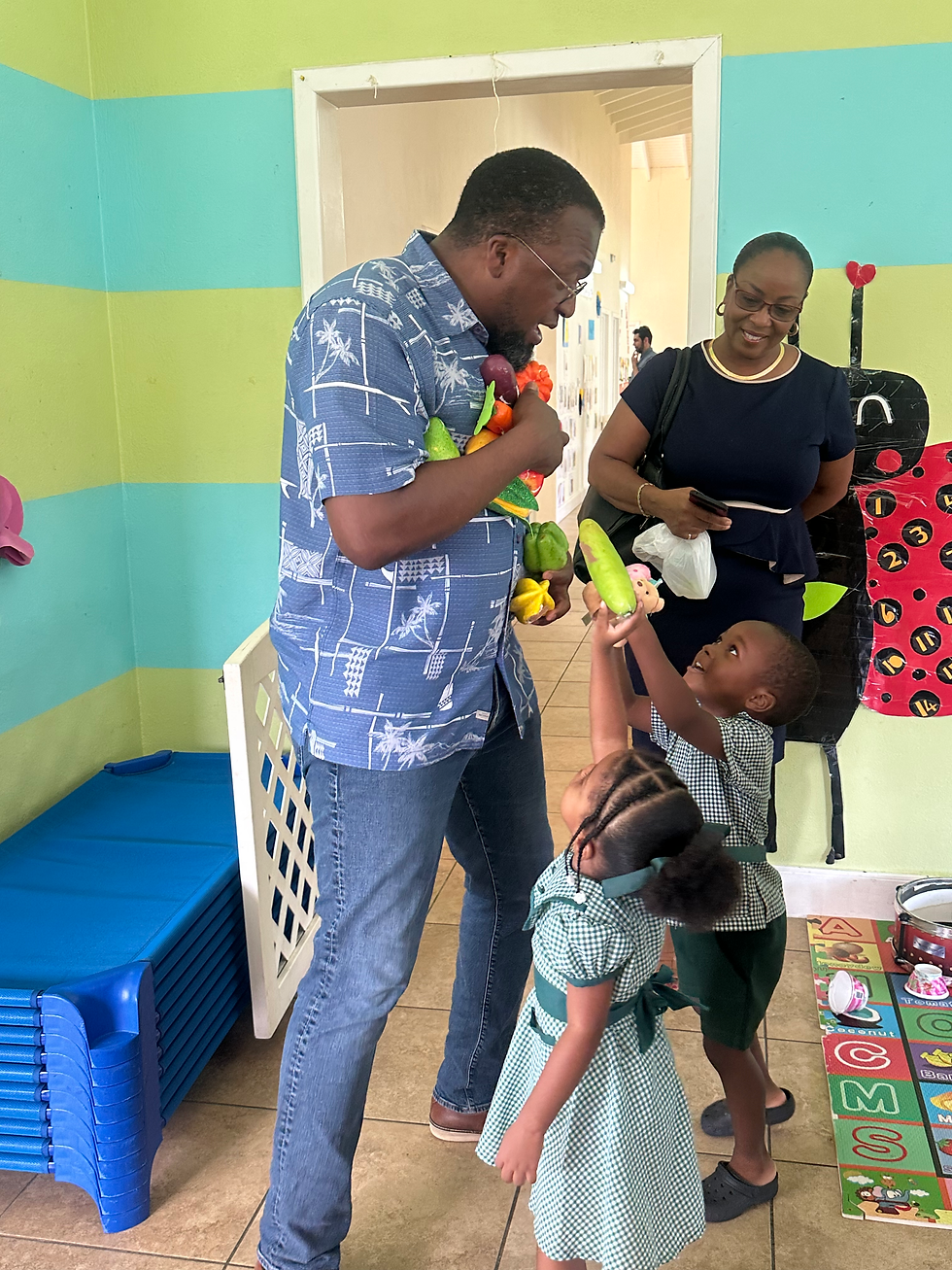
Learning happens through:
Hands-on exploration
Movement and rhythm
Outdoor discovery
Storytelling and imagination
Peer collaboration
Real-world challenges
Reflective conversations
This is experiential learning connected to Kolb’s Learning Cycle in its purest form: experience → reflection → concept → action.
When young children learn this way, SEL is not a lesson. It is lived.
🧩 What We Learned from St. Lucian Educators
Across dozens of classrooms, we learned extraordinary lessons:
Trust Local Expertise
Teachers’ cultural and community knowledge shaped every activity.
Play is Universal
No matter the country or context — play connects children to learning instantly.
Reflection Deepens Growth
Simple reflection prompts turned joyful play into powerful SEL moments.
Culture is Curriculum
When lessons reflect children’s identities, engagement becomes natural.
One educator said it best:
“When children see themselves in the lessons, they participate differently — more openly, more eagerly, more kindly.”

🎨 A Cross-Cultural Activity You Can Use Tomorrow
✨ Activity: “Culture Connection Circle”
Invite children to share something they love about their family or community.
Pair students to discuss similarities & differences.
Create a collaborative mural showcasing shared stories.
Reflect together: “What did we learn about each other?” “How does understanding each other help us play and work together?”
This is empathy, communication, and cultural awareness — made simple and beautiful.
🌎 Why This Matters: SEL Becomes Global, Local & Joyful
By blending:
Reggio Emilia
Freire’s question-posing
Experiential SEL
STEM literacy
21stCentEd’s design thinking
Cultural responsiveness
Community wisdom
Nature-based learning
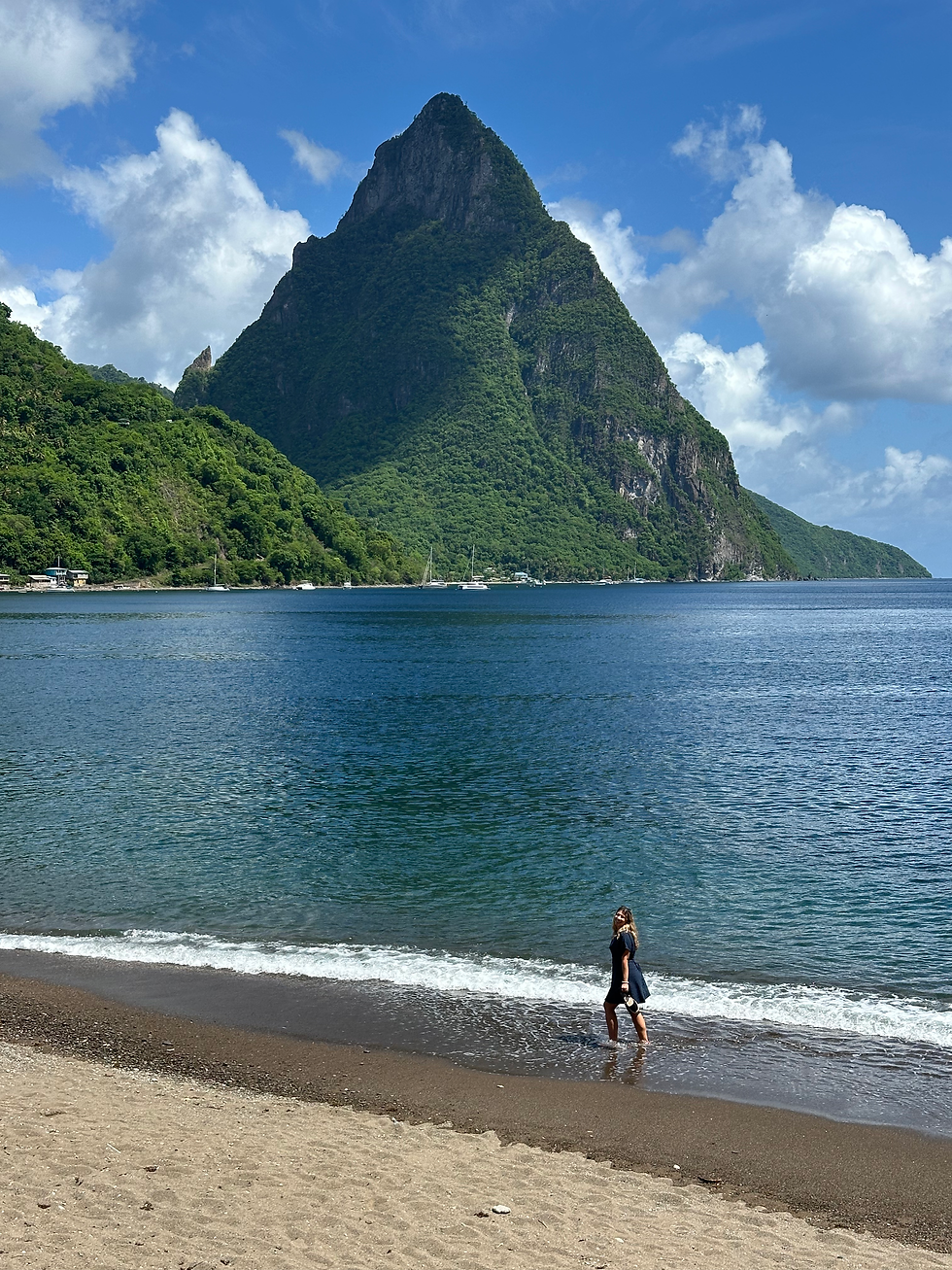
…St. Lucia is creating one of the most visionary early childhood movements in the world.
A curriculum where:
✨ Children ask bold questions
✨ Teachers facilitate, not dictate
✨ Culture leads learning
✨ Curiosity becomes confidence
✨ Play becomes problem-solving
✨ Classrooms become communities
This isn’t just a curriculum. It’s a future-building framework rooted in St. Lucia, relevant to the world.
🌟 Your Turn — Try This Tomorrow
Bring one cultural element into your morning meeting tomorrow:
🎵 a local song
📖 a family story
🌿 a nature object
🎲 a traditional game
Watch how connection blooms.
Ready to Bring Kikori to Life in Your Community?
Kikori is built to meet you where you are, whether you’re leading a single classroom or shaping culture across an entire school or district.
For Individual Educators
🖌 Your voice belongs in the curriculum.
A Kikori Pro Membership gives you instant access to:
Morning Meeting & Advisory slide decks
Hands-on, printable SEL activities
Curated music & movement playlists
Tools that help students connect, reflect, and lead
Perfect for educators who want meaningful SEL they can use tomorrow morning.
For Schools & Districts
🌴 Co-create once. Belong forever.
Kikori’s School-Wide Solution supports Tier 1–3 SEL by equipping every educator with:
Full platform access
Implementation guidance & training
Shared language and practices for culture-building
Bonus resources that support consistency and sustainability
Designed for schools ready to move from isolated activities to a lived, shared SEL experience.

Las tareas que incluyen números no siempre requieren una aplicación especializada. Con un Online Calculator, muchas operaciones pueden realizarse directamente desde el navegador. Esto facilita las comprobaciones rápidas y puede ser especialmente útil cuando estamos trabajando con cifras y queremos confirmar que los resultados sean correctos.
I really like the way you guide the reader through the entire topic.
https://podlogi24.net
Finding an available username is getting harder every year. This name generator helped me discover several alternatives that still sounded natural.
What an inspiring initiative to co-create a childhood curriculum in St. Lucia! cookie clicker How do you envision local cultures influencing the SEL strategies being developed? I'm curious about any challenges faced during this collaboration! 🌍✨