
The Power of Experiential Learning: What a Simple Snowflake Activity Reveals About Student Engagement

Updated: Dec 15, 2025
In schools from Alaska to New Hampshire, Kikori trainers led this simple paper-tear challenge to transform how educators experience learning.
Get the Instructions below:
 |  |
The Challenge Educators Are Facing Right Now
Walk into almost any classroom or staff meeting today and you’ll hear the same themes:
Students are disengaged.
Behaviors feel bigger.
Teachers are stretched thinner than ever.
And everyone is craving connection - but has no time to build it.
That’s why more schools are turning to experiential learning: because the most impactful SEL isn’t taught - it’s experienced.
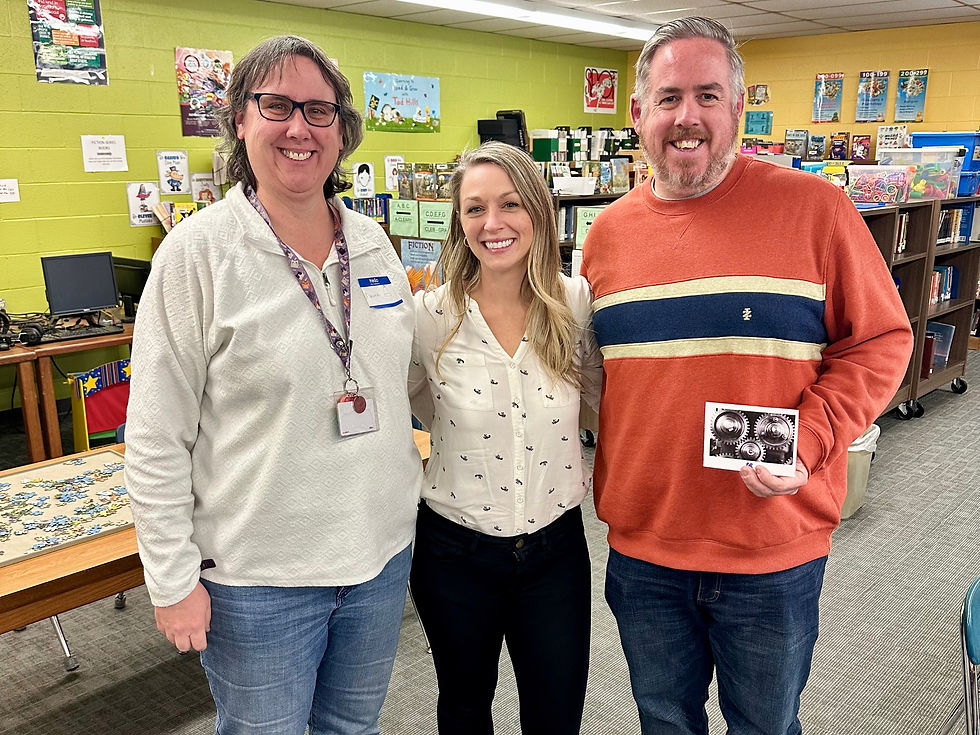
This truth came into sharp focus this year during our 2025-26 staff-wide trainings that spanned from the Lower Yukon School District in Alaska to Griffin Memorial Elementary School and Litchfield Middle School in New Hampshire.
The Moment That Changed the Room

We began each training session by asking every educator to hold up a blank piece of paper.
“No peeking at anyone else. Follow these directions exactly,” we said.
Tear the top corner.
Fold it in half.
Tear the right edge.
Fold again.
Tear the bottom.
Two minutes later, everyone unfolded their “snowflakes.”
And instantly - the room shifted.
Some laughed at how wildly different their snowflakes were. Some said, “Wait, I thought you meant to fold it this way…” Some realized they had been following assumptions, not instructions. Most said, “Wow… this is exactly what my students do.”
Get the Instructions below:
A teacher in Lower Yukon summed it up perfectly:
“I finally felt what my students feel when they’re confused - and it changed how I teach.”
That’s the moment experiential learning works its magic: not because we talk about SEL, but because we feel it.


Why Hands-On
Learning Works
Research is clear - when learners do, they remember.
According to Kolb’s Experiential Learning Cycle, meaningful learning happens when people:
Experience
Reflect
Conceptualize
Apply
The Paper Tear activity hits all four steps in under five minutes.
It reveals:
how assumptions shape behavior
how instructions can be interpreted differently
how uncertainty feels in your body
how reflection builds understanding
And because it’s felt, not explained - the insight sticks.
Educators in all of our districts told us they felt much more confident leading the activity with their students after they played it themselves!
How Experiential Learning Strengthens SEL
This simple activity activates core SEL competencies:
Self-Awareness: “Why did I make the choices I made?”
Self-Management: “How did I respond when I didn’t know what to do?”
Social Awareness: “No two snowflakes were alike - just like my students.”
Relationship Skills: “We all interpreted the same directions differently.”
Responsible Decision-Making: “What information did I need that I didn’t have?”
Instead of being told what SEL is, educators and students live it.
What We Saw in Lower Yukon & Griffin Memorial
Across our trainings, one theme kept coming up:
“This is the kind of PD we need - it’s fun, it’s real, and it actually helps us understand our kids.”
Teachers reported:
more empathy for students
more willingness to try new strategies
more connection with colleagues
renewed energy to bring SEL into daily practice
And many said they planned to use the activity with their students the very next morning.

Try This Activity in Your Classroom or Staff Meeting
Here’s the Paper Tear Snowflake Challenge ready to use tomorrow!
Paper Tear Snowflake Challenge
Objective: Students will work together to create a matching snowflake by following directions, then strategizing as a class to reconcile different interpretations. This activity builds communication, listening, teamwork, and problem-solving skills.
Materials Needed:
3-4 square sheets of paper per student (depending on how many snowflake rounds you do)
Listening ears and teamwork mentality!
Activity Instructions
Phase 1: Follow Directions
Give each student a square sheet of paper.
Explain that they will create a snowflake by tearing the paper, without looking at each other’s work.
Students should either close their eyes or sit back-to-back.
Teacher gives the first few tear instructions (simple steps, e.g.):
Fold your paper in half.
Tear off the top right-hand corner.
Fold it in half again.
Tear off the bottom left-hand corner.
Ask students to open their eyes and open up their snowflakes to see what they look like.
Phase 2: Strategize as a Class
Ask students to look at their snowflakes and compare results (eyes open now).
Guide a brief discussion:
“Do all snowflakes look the same?”
“If not, why not?”
“Do you think we could create a strategy where we all created the same snowflake?”
Give students with 3-5 minutes to create a plan for what they will do during the next set of snowflake creating.
What can they do to ensure they are following the directions in the same way?
Phase 3: Round 2
Give each student a new square sheet of paper. Their goal is that their snowflakes all look the same.
Students should either close their eyes or sit back-to-back.
Teacher gives the first few tear instructions (simple steps, e.g.):
Fold your paper in half.
Tear off the top right-hand corner.
Fold it in half again.
Tear off the bottom left-hand corner.
You may add in 1-2 more instructions depending on the level of your students.
Ask students to open their eyes and rate how they think they did at following their strategy.
Phase 4: The Big Reveal
Students unfold their snowflakes.
Compare: the goal is for the whole class to have matching snowflakes.
Optional Extension
Decorate snowflakes with markers or crayons.
Display them as a “Class Collaboration Snowflake” to celebrate teamwork.
Reflection Questions
Reflect (What happened?)
What did your snowflake look like after the first few tears?
How was it similar or different from your classmates’?
Connect (So what?)
Why do you think your snowflakes looked different at first?
How did strategizing with your classmates help you work toward a matching snowflake?
Grow (Now what?)
What were the strategies that worked during this activity?
What could we do differently in class to make sure everyone is working together and no one is left behind?
✅ Tips for Success
Start with simpler folds and tears, then increase complexity.
Encourage students to use precise language: “tiny triangle on the top left corner, fold line touching the edge.”
Emphasize that the “differences” from Phase 1 are part of the learning experience and make the class discussion richer.
Time: 5 minutes
Prep: Zero
Impact: Big
Free Download: Snowflake Activity + Reflection Guide
If this story inspired you, share it with a colleague who could use a spark this week.
✨ Free Printable: “Paper Tear Snowflake Activity + Reflection Sheet”
Your Turn: Bring Experiential SEL to Life
If you want more hands-on, connection-building moments just like this, we’d love to support you. Kikori is built to meet you where you are, whether you’re leading a single classroom or shaping culture across an entire school or district.
For Individual Educators
❄️ Try one simple experience. Watch engagement unfold.
A Kikori Pro Membership gives you instant access to:
Morning Meeting & Advisory slide decks
Hands-on, printable SEL activities
Curated music & movement playlists
Tools that help students connect, reflect, and lead
Perfect for educators who want meaningful SEL they can use tomorrow morning.
For Schools & Districts
🏔 Shared experiences travel farther than initiatives.
Kikori’s School-Wide Solution supports Tier 1–3 SEL by equipping every educator with:
Full platform access
Implementation guidance & training
Shared language and practices for culture-building
Bonus resources that support consistency and sustainability
Designed for schools ready to move from isolated activities to a lived, shared SEL experience.

Great recap of an exciting opening day with impressive matches and international talent. I also enjoy checking Lotería de Hoy for daily updates. Thanks for sharing this memorable tournament coverage!
The game Wacky Flip is easy to understand but challenging to master. New players can start performing basic flips right away, while experienced players can aim for more advanced tricks and higher scores.